
Y Combinator LogoAnnouncing Enjamb's backing by Y Combinator to build the agentic workspace for drug programs.
Use cases

Clinical development

Design trials from the evidence, not from disconnected handoffs.

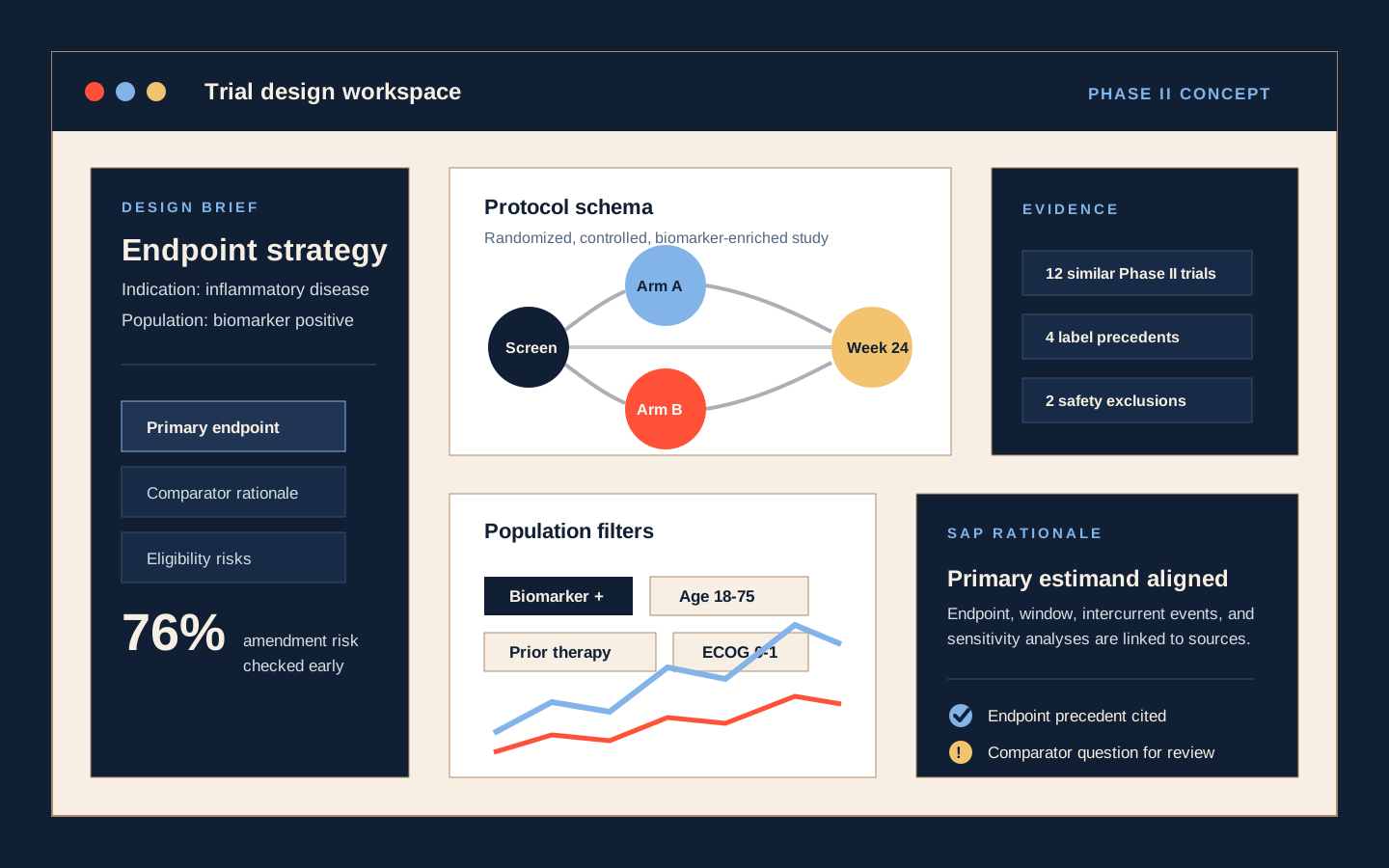
Enjamb agents synthesize clinical precedent, identify endpoints and patient populations, draft protocol concepts, and carry the rationale into SAPs and review-ready materials.

76%
of protocols are amended after approval
$535K
median Phase III amendment cost
Traceable
endpoint and population rationale
Trial design workspace with protocol schema, population filters, endpoint evidence, and SAP rationale

Workspace prompt

Design a Phase II trial concept with endpoint, population, comparator, and SAP rationale.

Agent response

Enjamb reviews precedent, proposes design options, drafts protocol language, and prepares the evidence behind the strategy.

01
Study the precedent
02
Generate design options
03
Draft protocol and SAP scaffolds
04
Stress-test the design

Execution runbook

What happens after the prompt

Enjamb turns an open-ended program request into a reviewable chain of evidence, analysis, drafting, and audit.

01

Study the precedent

Agents extract comparator choices, endpoints, inclusion criteria, safety monitoring, and design tradeoffs from prior studies.

02

Generate design options

The workflow proposes arms, populations, endpoints, visit schedules, and analysis considerations with pros and cons.

03

Draft protocol and SAP scaffolds

Agents turn approved choices into protocol concepts, endpoint rationale, SAP outlines, and review notes.

04

Stress-test the design

Audit agents look for amendment risks, evidence gaps, inconsistent assumptions, and unsupported design claims.

Use case workflow

The work inside the workspace

Request a demo

Clinical evidence

See the precedent before designing the study.

Agents compare prior trials, labels, publications, endpoints, eligibility criteria, and safety signals so design choices are grounded in the best available context.

  • Extract endpoint, comparator, and population precedent
  • Identify amendment risks and evidence gaps early
  • Create evidence tables for clinical review

Trial documents

Move from design rationale to protocol and SAP drafts.

Protocol concepts, endpoint rationale, analysis considerations, and SAP sections can be generated from the same evidence base and reviewed in the workspace.

  • Draft protocol concepts and inclusion criteria
  • Generate SAP outlines and analysis rationale
  • Audit consistency across protocol, SAP, and evidence tables

Agent team

Specialized agents, one program context

Precedent agent

Compares trials, labels, endpoints, eligibility criteria, and outcomes.

Design agent

Creates protocol concepts and design alternatives from evidence.

SAP agent

Connects endpoints and populations to analysis strategy.

Risk agent

Flags amendment risk, weak rationale, and operational ambiguity.

Artifacts produced

  • Trial design memo
  • Endpoint rationale
  • Protocol concept
  • SAP outline

Review safeguards

  • Endpoint evidence links
  • Comparator rationale checks
  • Eligibility consistency
  • Amendment risk flags

Outcomes

What teams get back

The goal is not more documents. It is a faster, more traceable way to move program work into review.

Sharper endpoint selection

Better population and comparator rationale

Fewer late design surprises