
Y Combinator LogoAnnouncing Enjamb's backing by Y Combinator to build the agentic workspace for drug programs.
Platform

Compute and analysis

Run the analysis behind the documents in the same workspace.

Upload datasets, ask for the analysis, and Enjamb agents use Python and R to clean, test, visualize, document, and quality-check the statistical outputs behind clinical and regulatory work.

Python
and R compute built in
SDTM
ADaM, TFL, and QC workflows
Minutes
from raw files to analysis draft
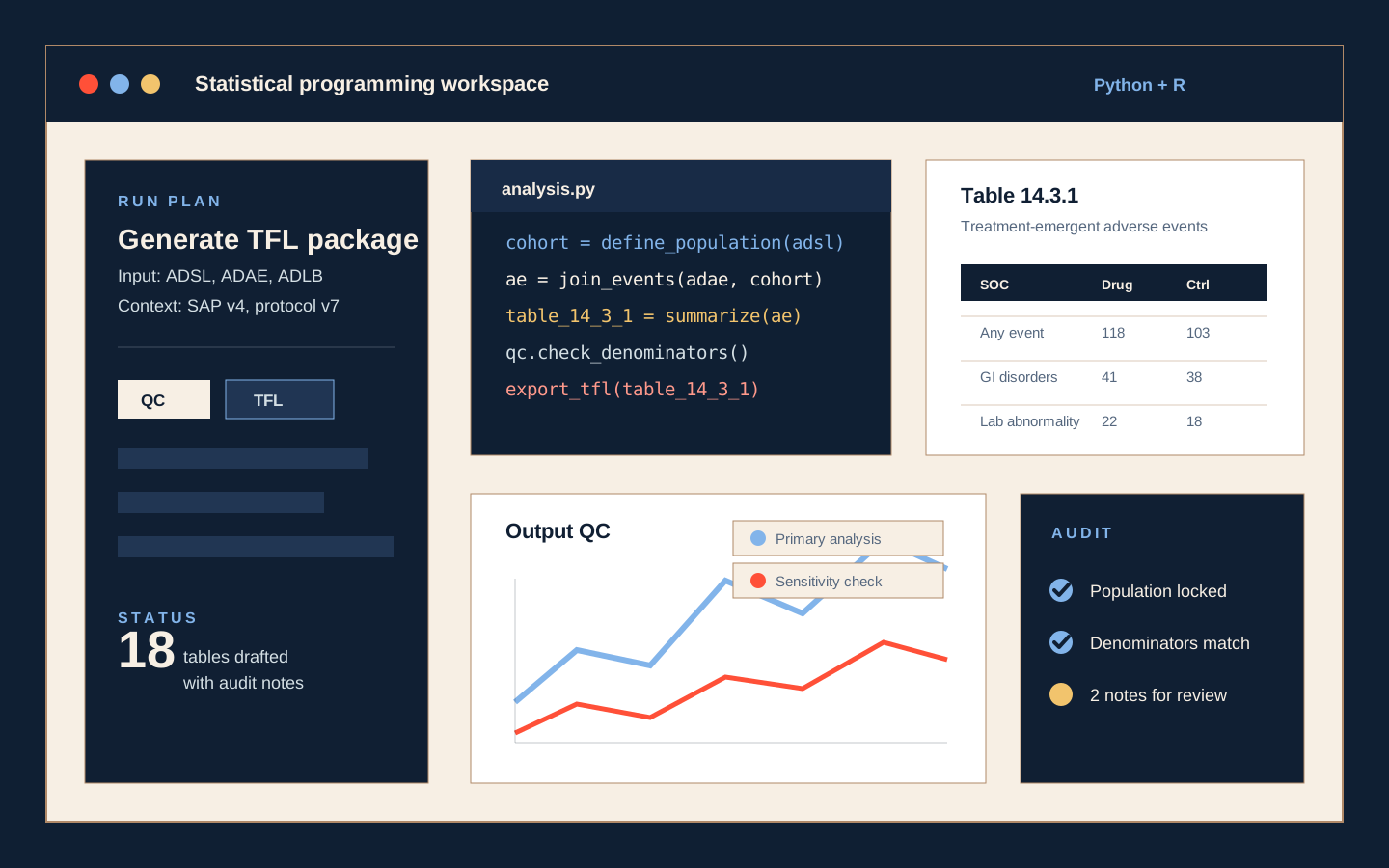
Statistical programming workspace with Python, R, TFLs, and QC checks

Workspace prompt

Upload clinical data extracts and generate the first statistical programming pass for analysis review.

Agent response

Enjamb prepares data checks, writes inspectable Python and R, drafts TFL outputs, and links results to the analysis narrative.

01
Inspect the data package
02
Draft the analysis plan
03
Run reproducible compute
04
Audit the outputs

Execution runbook

What happens after the prompt

Enjamb turns an open-ended program request into a reviewable chain of evidence, analysis, drafting, and audit.

01

Inspect the data package

Agents profile columns, dictionaries, missingness, coding conventions, cohort definitions, and analysis constraints.

02

Draft the analysis plan

The stats agent maps endpoints, populations, tests, sensitivity analyses, and QC checks before executing code.

03

Run reproducible compute

Python and R agents clean, transform, test, visualize, and generate tables, figures, and listings.

04

Audit the outputs

Generated code, assumptions, TFLs, and narratives are checked against the source data and SAP context.

Platform capability

The work inside the workspace

Request a demo

Analysis

From raw data to reproducible outputs.

Agents choose appropriate analyses, execute code, generate figures and tables, and explain conclusions in language clinical, statistical, and regulatory teams can review.

  • Clean and harmonize uploaded datasets
  • Run exploratory, confirmatory, and sensitivity analyses
  • Generate TFLs, QC checks, and analysis narratives

Governance

Every result stays inspectable.

Code, assumptions, files, figures, and conclusions remain inside the workspace, making it easier to audit how an output was produced and what evidence supports it.

  • Review generated Python and R code
  • Connect statistical outputs to SAP and submission text
  • Preserve provenance for downstream audit and review

Agent team

Specialized agents, one program context

Data profiler

Finds data issues, variable definitions, and cohort logic before analysis.

Programming agent

Writes Python and R for transformations, tests, plots, and tables.

QC agent

Checks generated outputs against source data, assumptions, and expected ranges.

Narrative agent

Turns results into concise clinical and regulatory analysis language.

Artifacts produced

  • Analysis scripts
  • QC report
  • TFL draft
  • Analysis narrative

Review safeguards

  • Code inspectability
  • Data lineage
  • Assumption logs
  • Output consistency checks

Outcomes

What teams get back

The goal is not more documents. It is a faster, more traceable way to move program work into review.

Shorter waits for exploratory analyses

Reusable statistical programming workflows

Clearer bridge between data, TFLs, and narratives