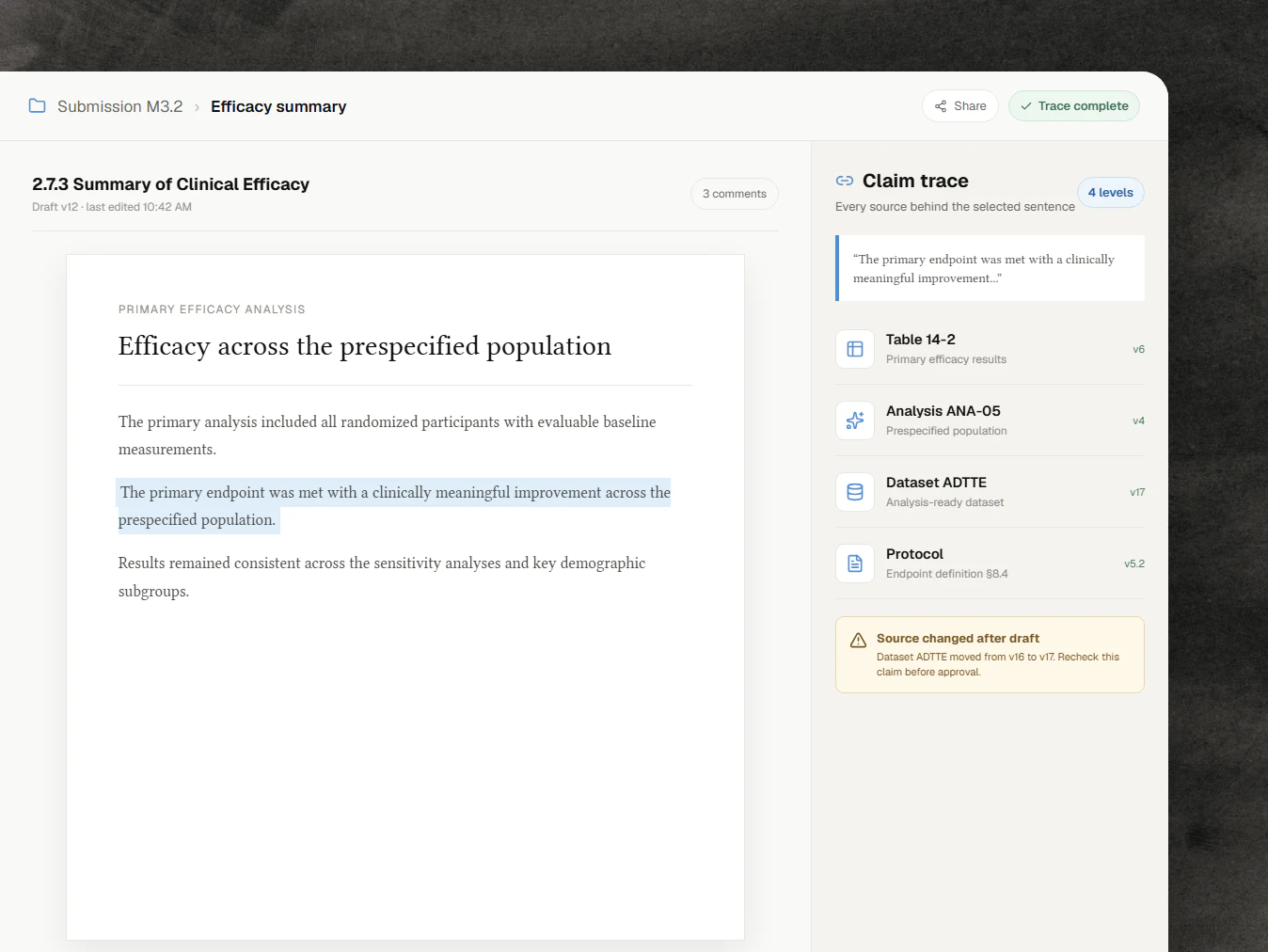
Work across the whole program. Read, draft, and file across Benchling, Veeva, Medidata, the LIMS, and your own internal tools, inside one run.
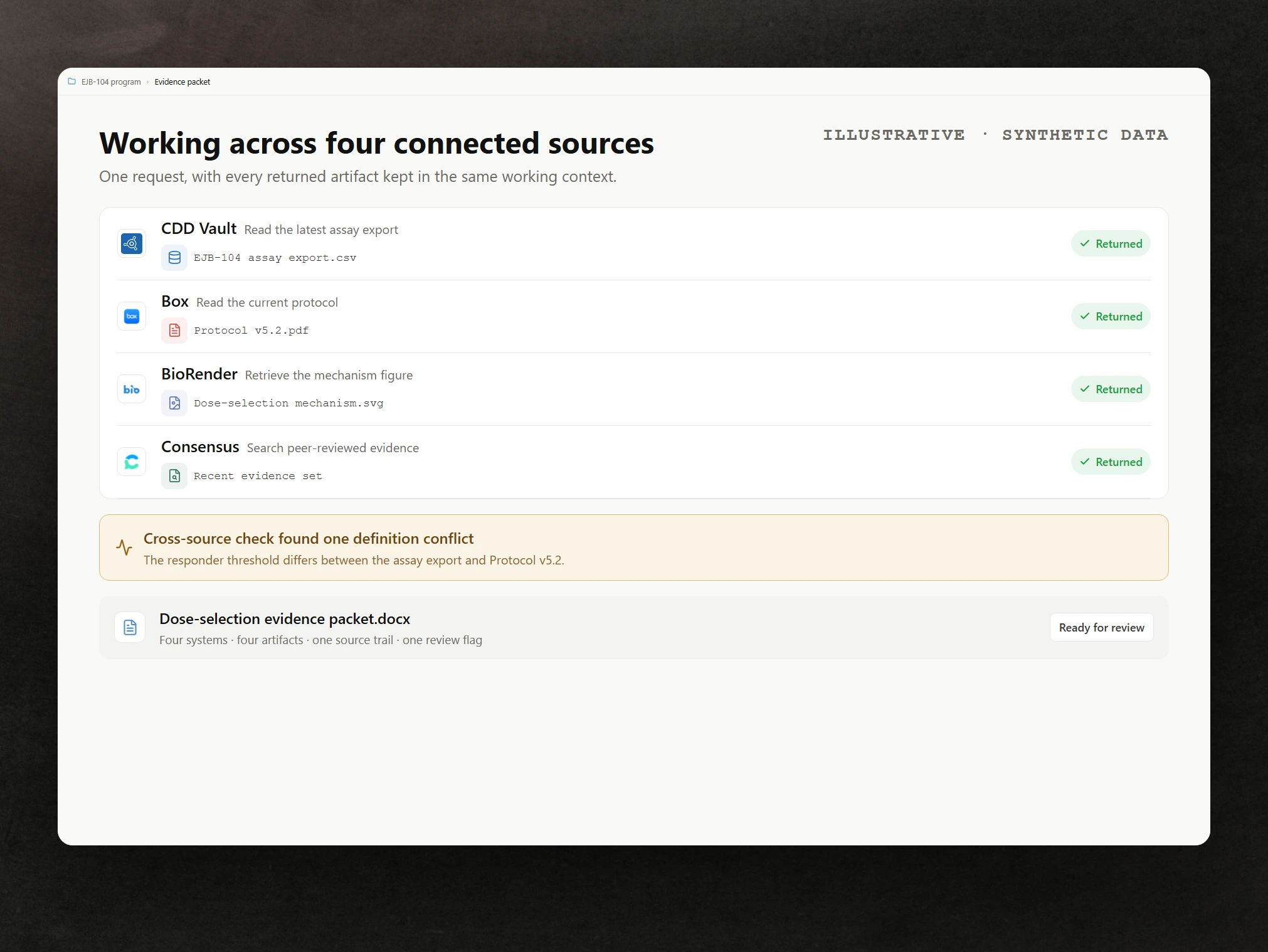
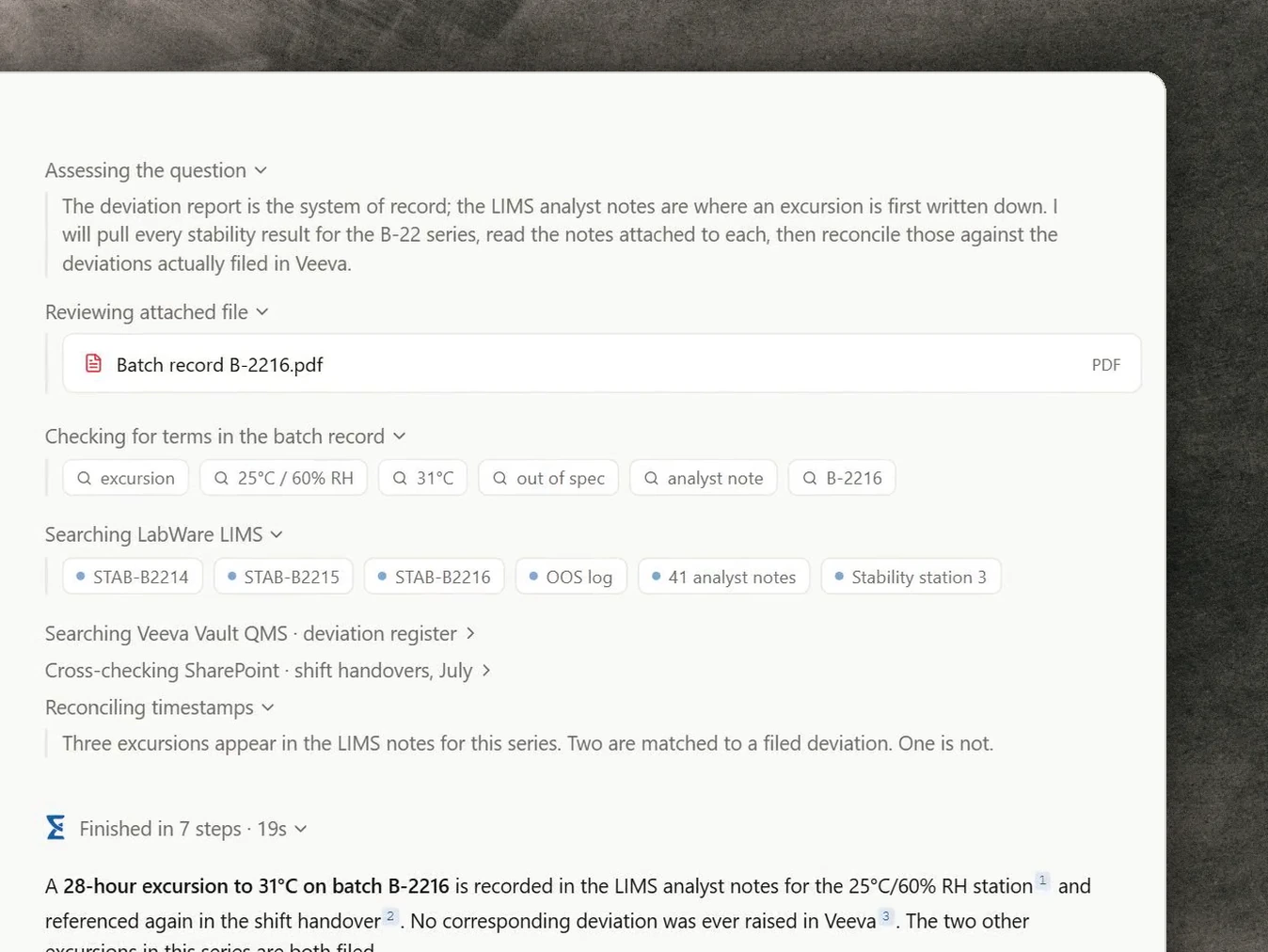
Search every system, then act in it
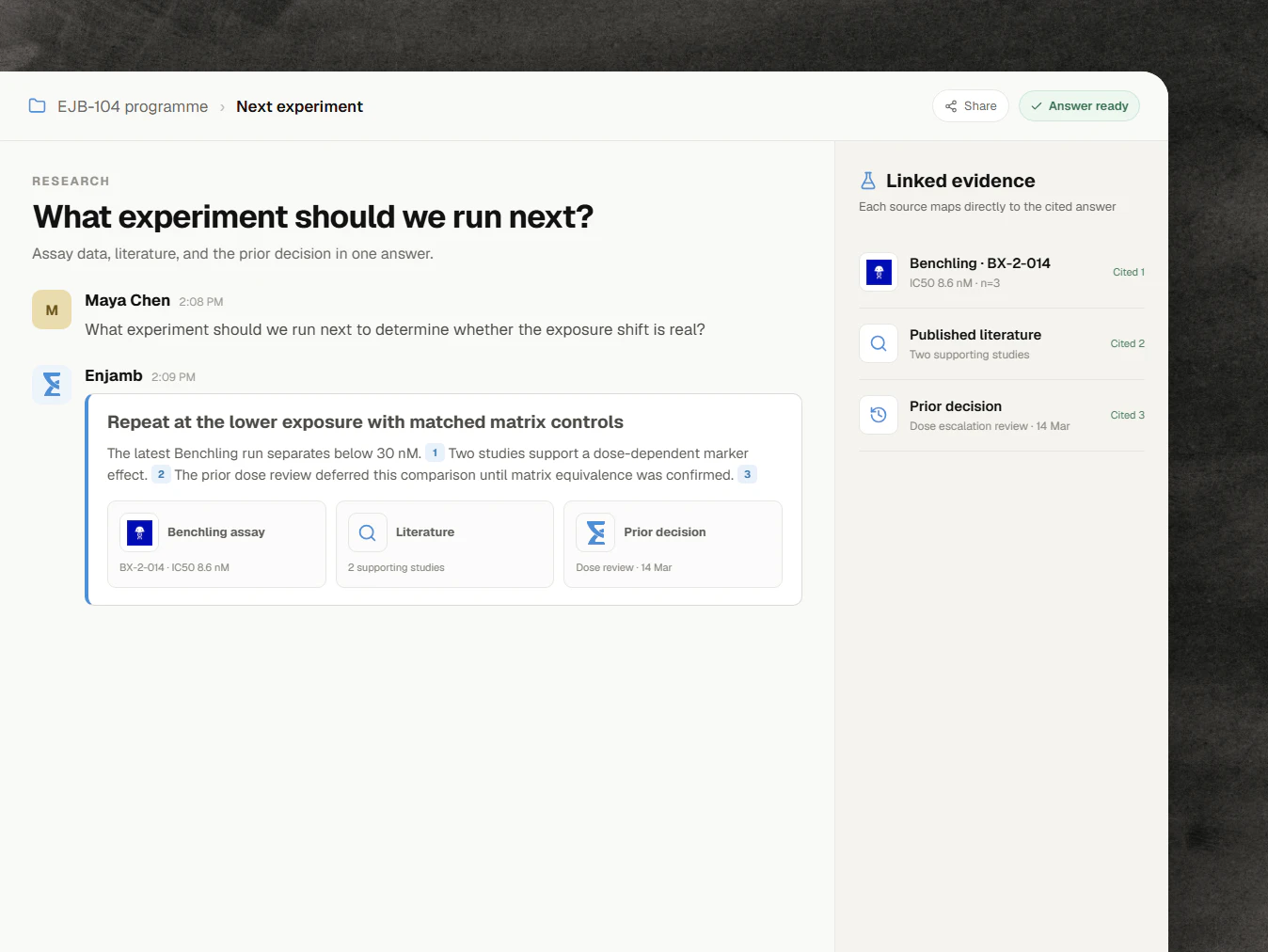
One request can read the evidence, run the analysis, and write the result back into the system it came from.
Scientific systems
Query ELNs, LIMS platforms, registries, and data environments, and post results back to the record they belong to.
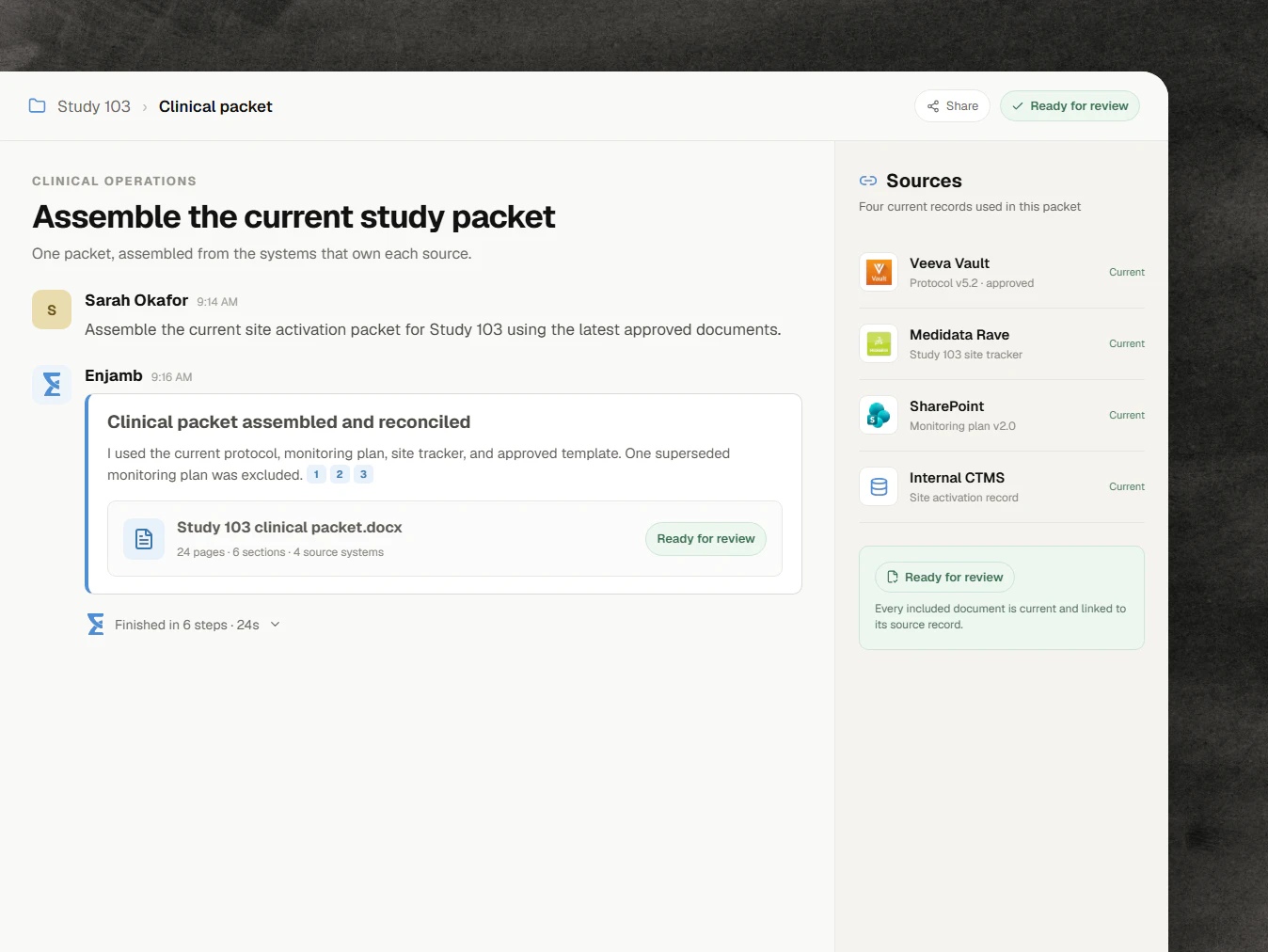
Clinical and regulatory systems
Work across CTMS, eTMF, safety, and submission environments, from reading a record to filing the update against it.
Enterprise software
Reach communications, file stores, and productivity suites, and create the document, message, or task the work needs.
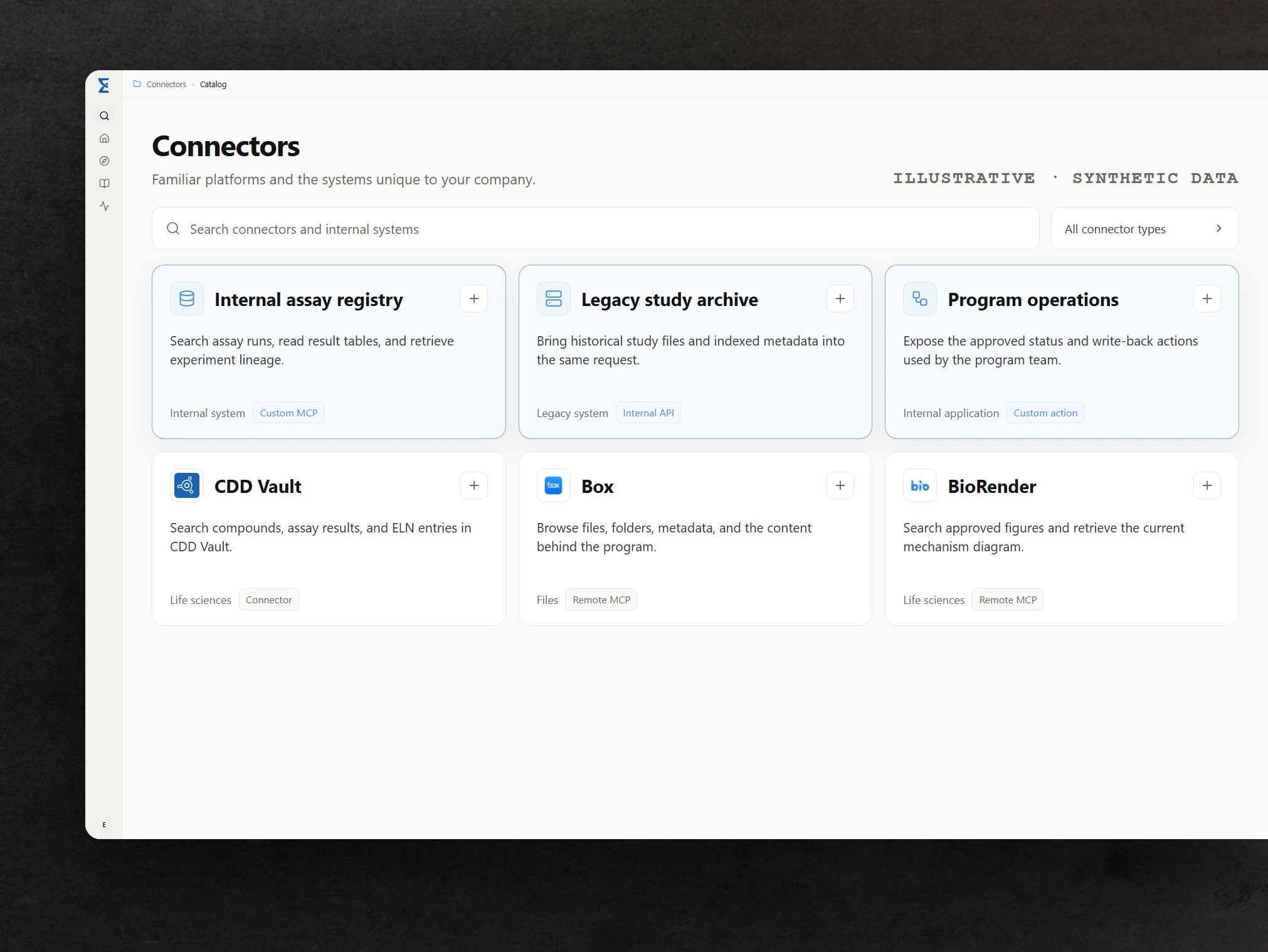
Connect the systems only you have
The tools your company built for itself hold context no vendor catalog reaches. Enjamb connects to those the same way it connects to Benchling.
Internal applications
Connect the APIs, databases, and tools your team built, with the same read and write access a person on that team has.
Legacy systems
Bring older sources into the work, and update them in place, without replacing the workflows people still depend on.
Custom actions
Expose the specific operations a workflow needs so an agent can run them directly instead of asking someone to.
Keep every action under control
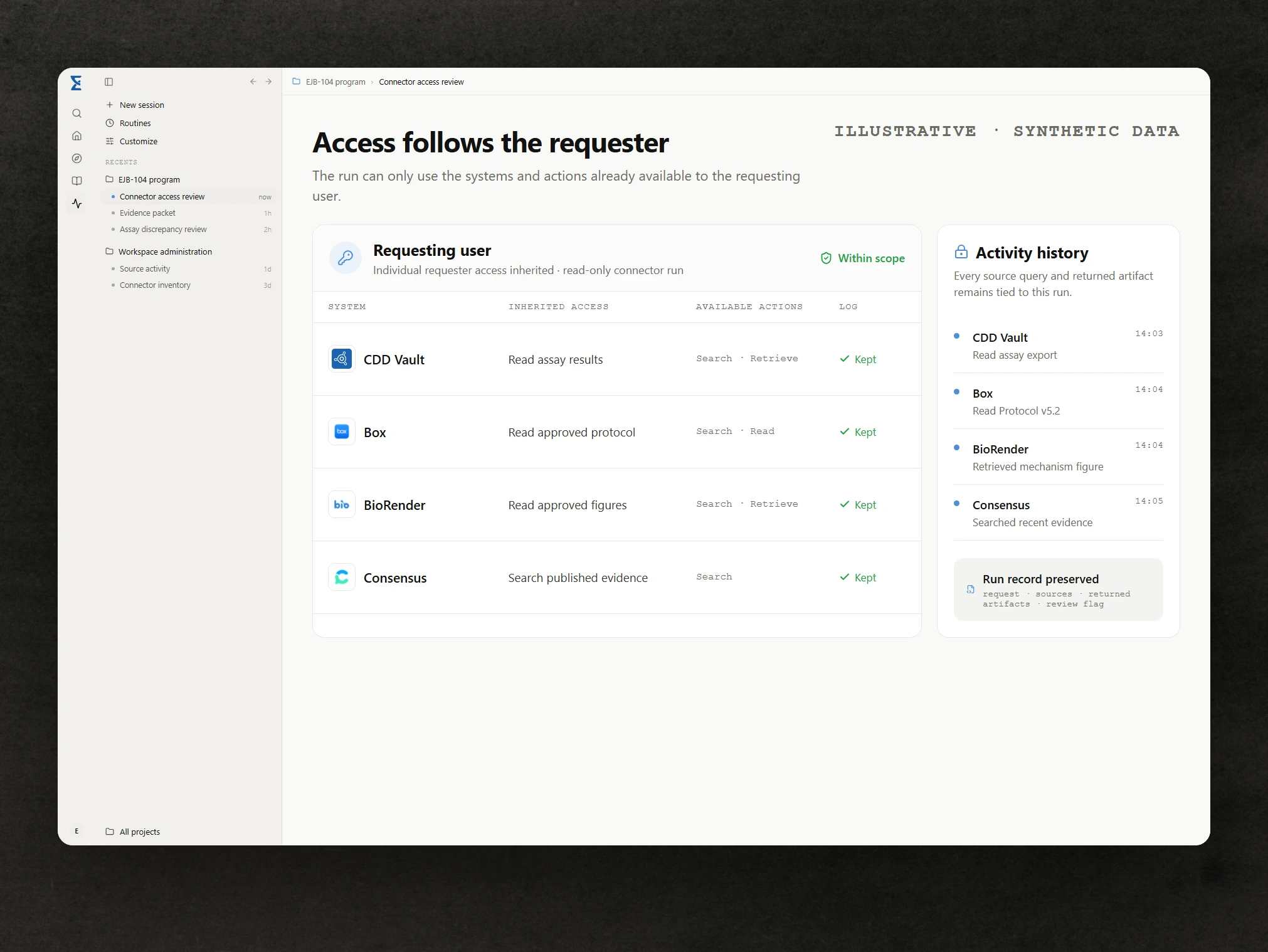
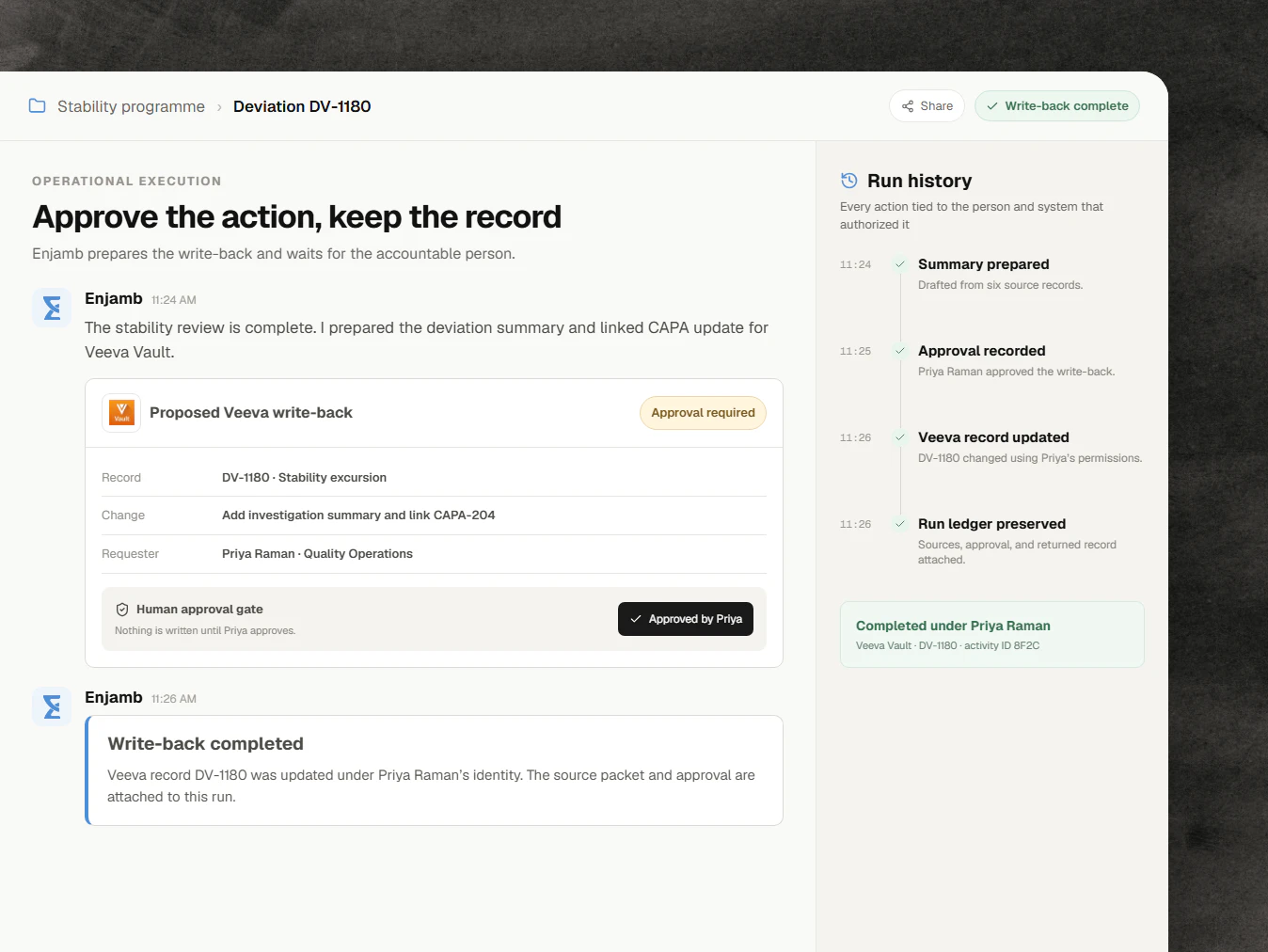
Enjamb acts through the requester’s identity and preserves the controls of every connected system.
User-level permissions
People only see and change what their own account is already permitted to access.
Read and write scopes
Decide per connector what an agent may search, create, update, or execute.
Complete activity history
Keep each query, source, action, and approval tied to the run that produced it.